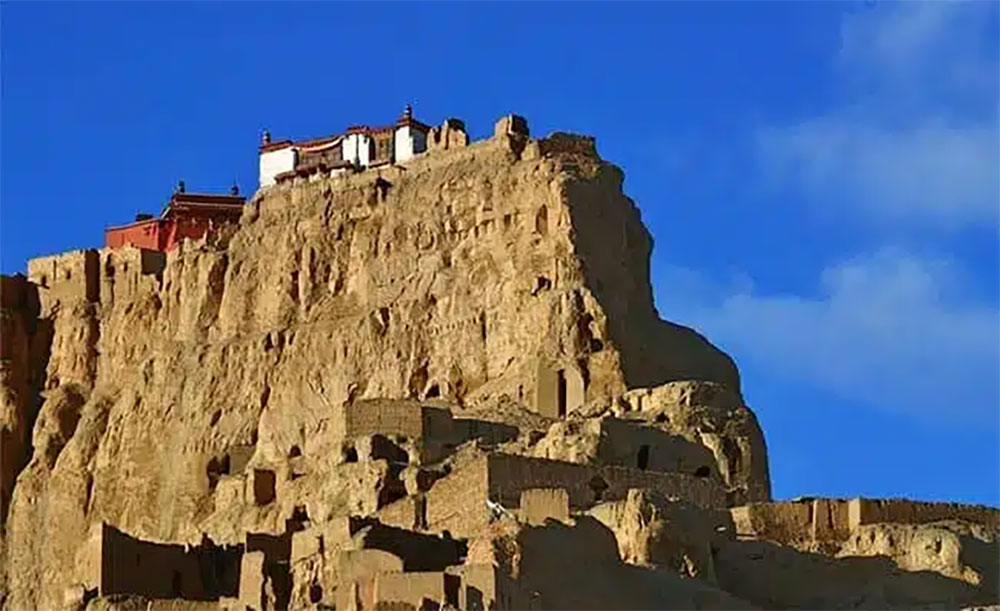
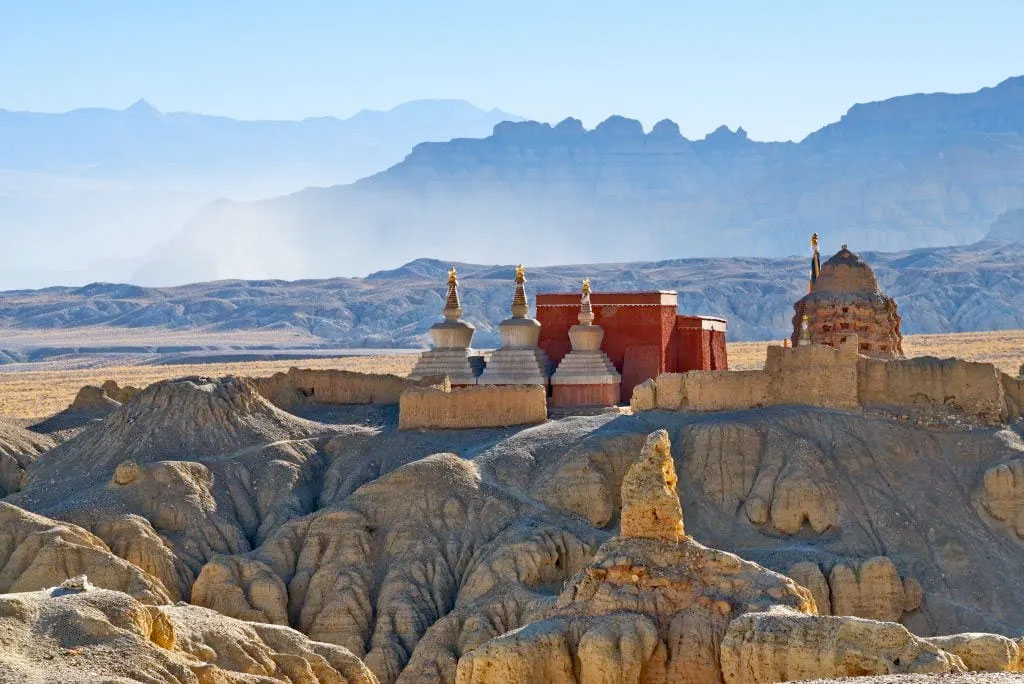
Guge is one of the most renowned places in Ngari as well as throughout Tibet. Guge was one of the subkingdoms of three Ngari kingdoms. Among the three, Guge kingdom became the highlight of the era which existed from the 10th century up to the 17th century witnessing 16 heredity kings lasting for more than 700 years. The two ancient capitals of Guge ae Tholing and Tsaparang.
The Guge kingdom was established by Kyide Nyimagon, the great grandson of Lang Dharma who was the last king of Tubo dynasty. Tubo dynasty was founded by the great King Srongtsen Gonpo who unified all Tibetan tribes and established the great Tibetan Empire. After the fragmentation of the Tibetan empire, Guge kingdom emerged as the central power and influence.
Guge kings were widely renowned as the great Ngari Dharma kings. One of the greatest contributions of the Guge kingdom was revival of Buddhism when it declined in central and other parts of Tibet. The third Guge king invited Indian master Atisha to Tibet in 1042 A.D. who stayed in Tibet for 3 years and wrote Later in 11th century a huge Buddhist conference was arranged at Gyatsa Jhakhang a temple named after a renowned Guge king Yeshi Wod. Thereafter, Buddhism flourished again Tibet which is widely known as the “second advancement” of Buddhism.
During reign the Guge kingdom, Guge became the epicenter of Buddhism, trade, arts, and craftsmanship among many other new developments. These days, we can still witness ancient wall murals of Guge kingdom which are a fusion of Tibetan Buddhist, Indian Kashmiri, and Nepalese paintings.
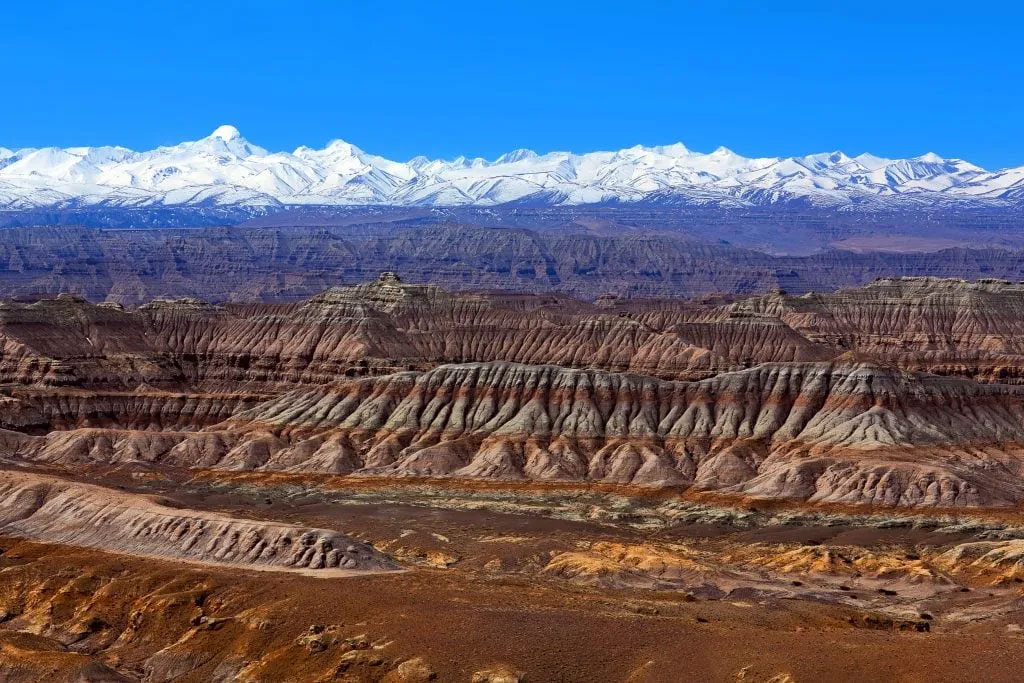
It was believed that once the mighty Guge kingdom also controlled parts of ancient silk road and collected taxes from the traders to fund its kingdom. Guge is also renowned for its unique land formation. It has one of the largest forest soil in the world. The beauty of Guge kingdom lies in the architecture of Guge place which was seamlessly molded into these forest soil. Today the Guge kingdom has become a subject of great interest to scholars around the world.